10 simple designs & techniques
Creativity is like a muscle. It needs to be exercised, and when you are just starting your creative journey, it helps to begin with simple and approachable ideas. These easy ceramic painting designs are perfect for beginners who want to explore ceramic painting without feeling overwhelmed. Simple does not mean boring. In fact, when it comes to glazing ceramics, less is often more. Clean shapes, minimal colors, and confident marks tend to create the most beautiful results. Below you will find beginner-friendly ceramic painting ideas, starting with the easiest techniques and slowly building up in complexity. All of them can be tried in a ceramic painting workshop or at home with basic tools.
Below you will find beginner-friendly ceramic painting ideas, starting with the easiest techniques and slowly building up in complexity. All of them can be tried in a Pottery and Paint workshop or at your local pottery studio or home.
1. Splatter technique
Required skills: Easy
Materials and tools: toothbrush and various brushes
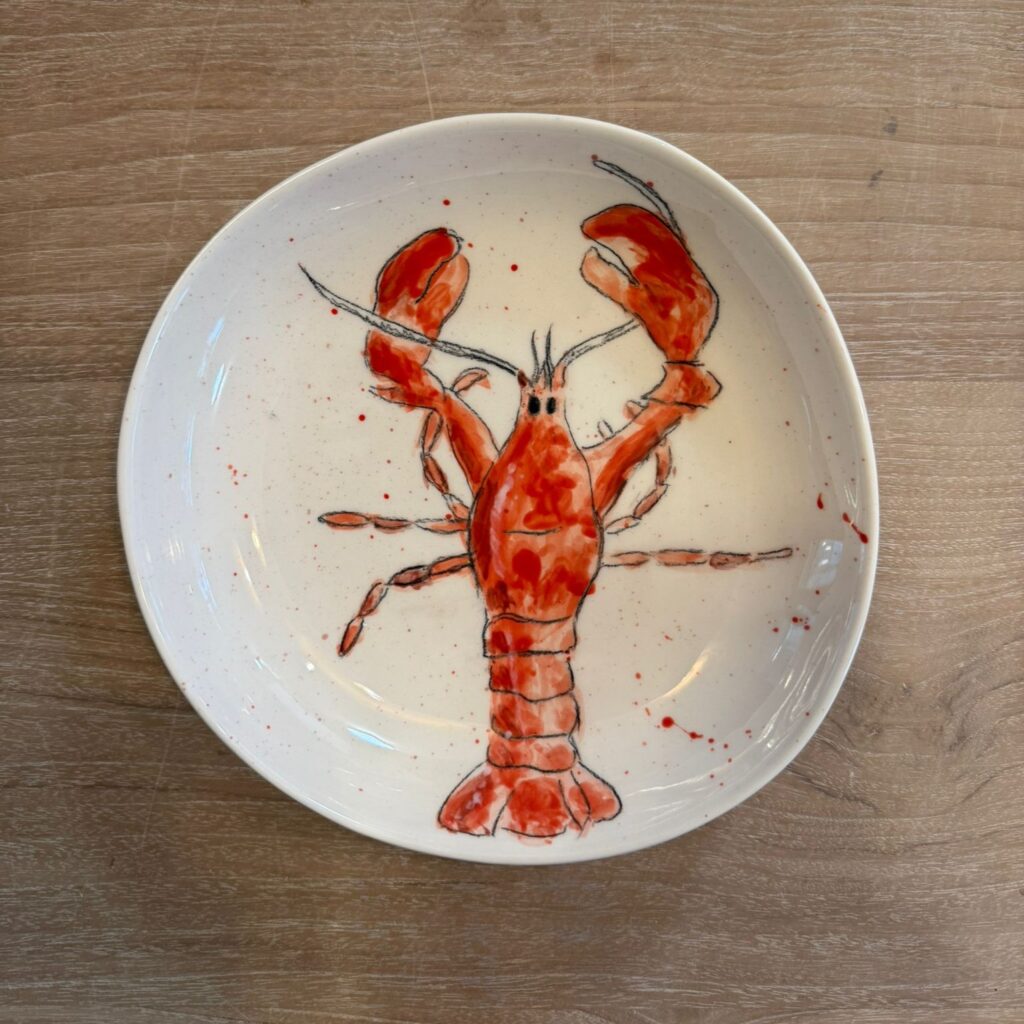
The spatter technique is one of the most playful and forgiving ceramic painting techniques for beginners. It brings movement and personality to every piece.
The classic method involves dipping a brush in glaze and flicking it onto the ceramic object. However, this can quickly become messy and is often difficult to control. Using a toothbrush offers significantly more precision.
Here's how:
- Dip the toothbrush into the glaze
- Hold close to your ceramic piece
- Gently stroke the bristles with your thumb to loosen the glaze.
The short, firm bristles create fine, even splatters on the surface. For a slightly bolder effect, you can also use dry bristle brushes with firm bristles.
Beginner's tip:
It's tempting to want to control every splash or correct larger drops. Resist this impulse. It's precisely these small irregularities that make the design vibrant and spontaneous.
2. Abstract brushstrokes
Difficulty level: Easy
Materials and tools: Various brushes
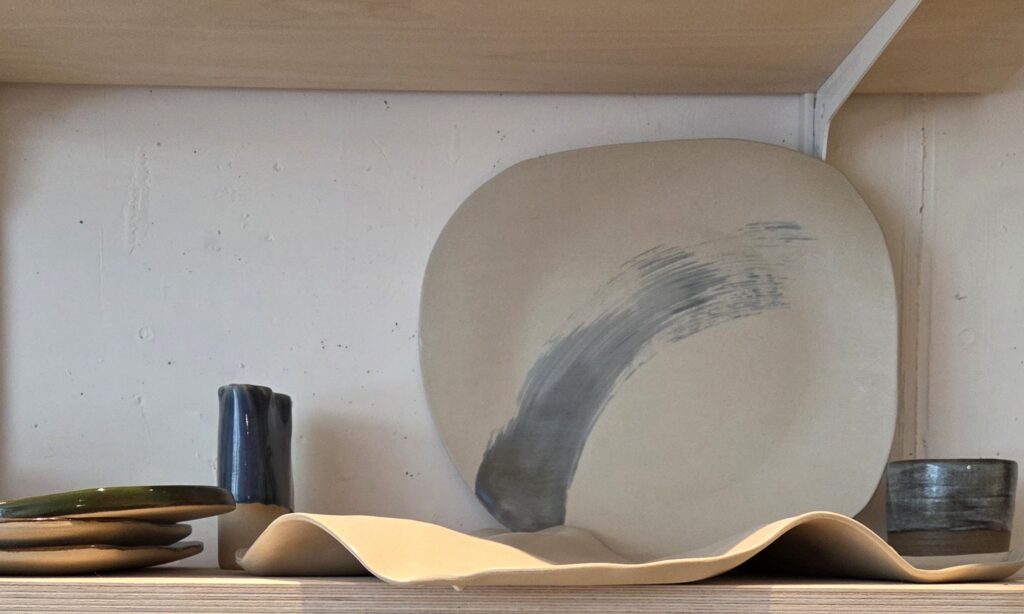
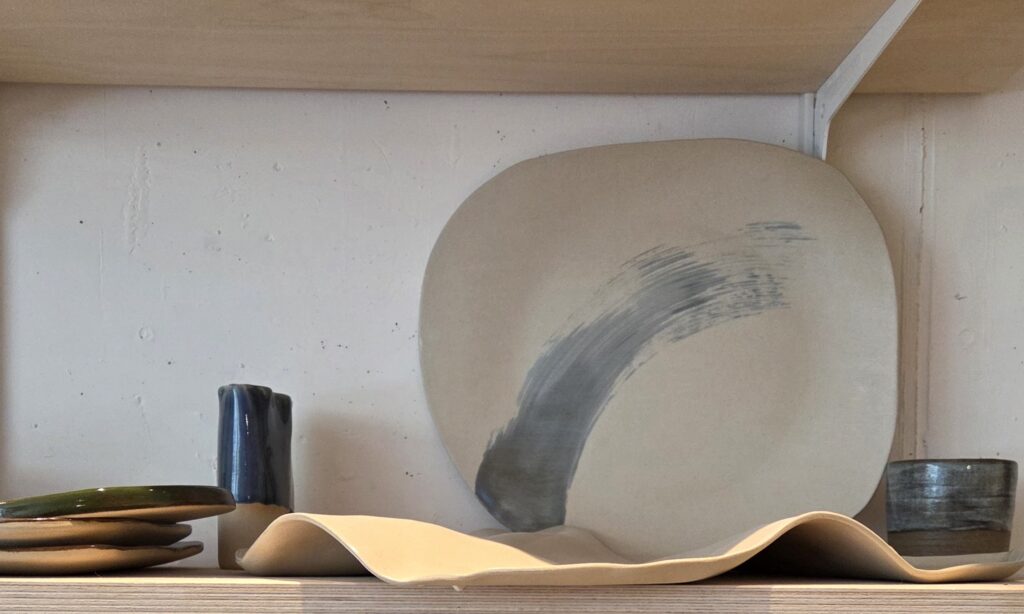
Abstract brushstrokes are ideal for anyone who feels unsure about drawing or precise lines. This technique is about movement, pressure, and texture, not perfection.
Dry brushes create visible bristle marks and a textured surface. Wet brushes produce softer, flowing strokes. The amount of glaze on the brush and the pressure applied also significantly affect the result.
Important tips for beginners:
- Choose two or three different brushes. Each will leave its own unique mark.
- Test your brushstrokes on paper first before painting your ceramic piece.
- Once the glaze touches the ceramic, there is no going back.
3. Stripes
Difficulty level: Easy to very complex
Materials and tools: Adhesive tape, ruler, icing pen (all optional)
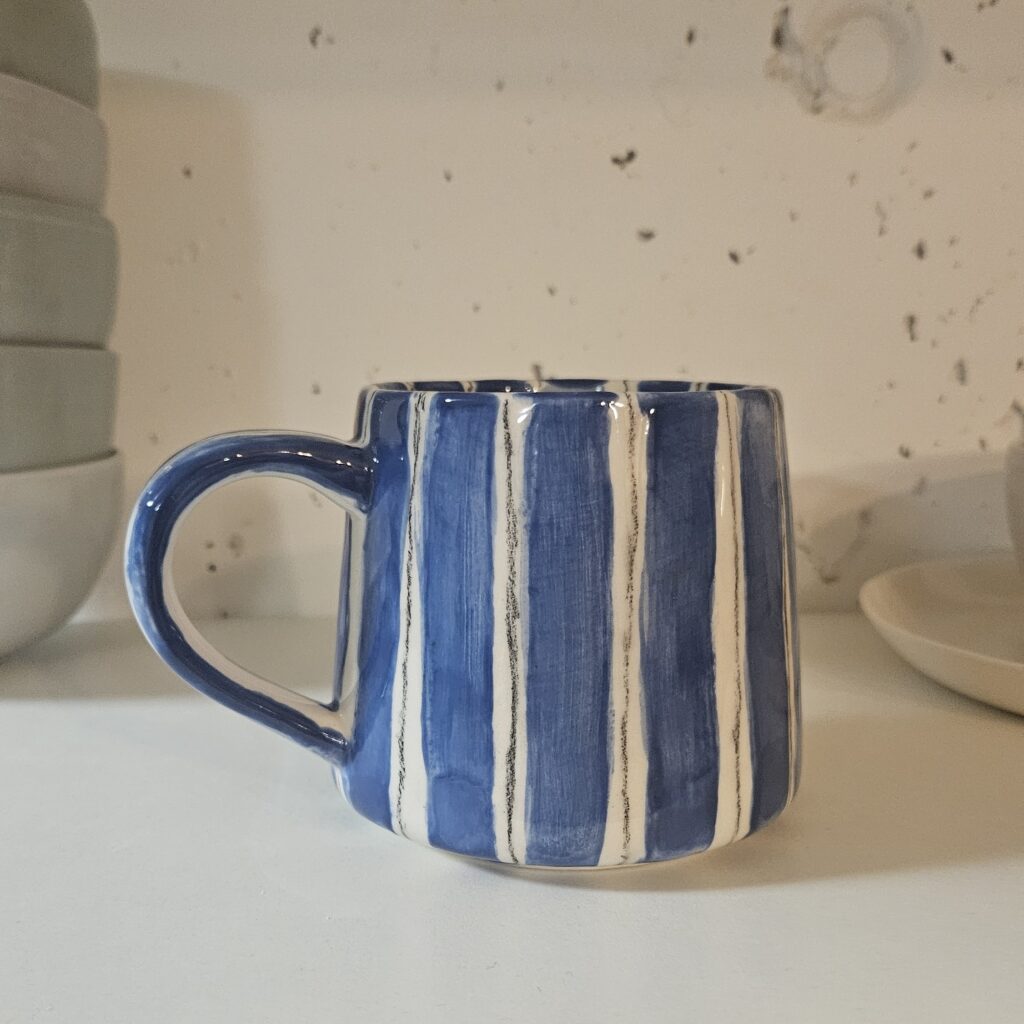
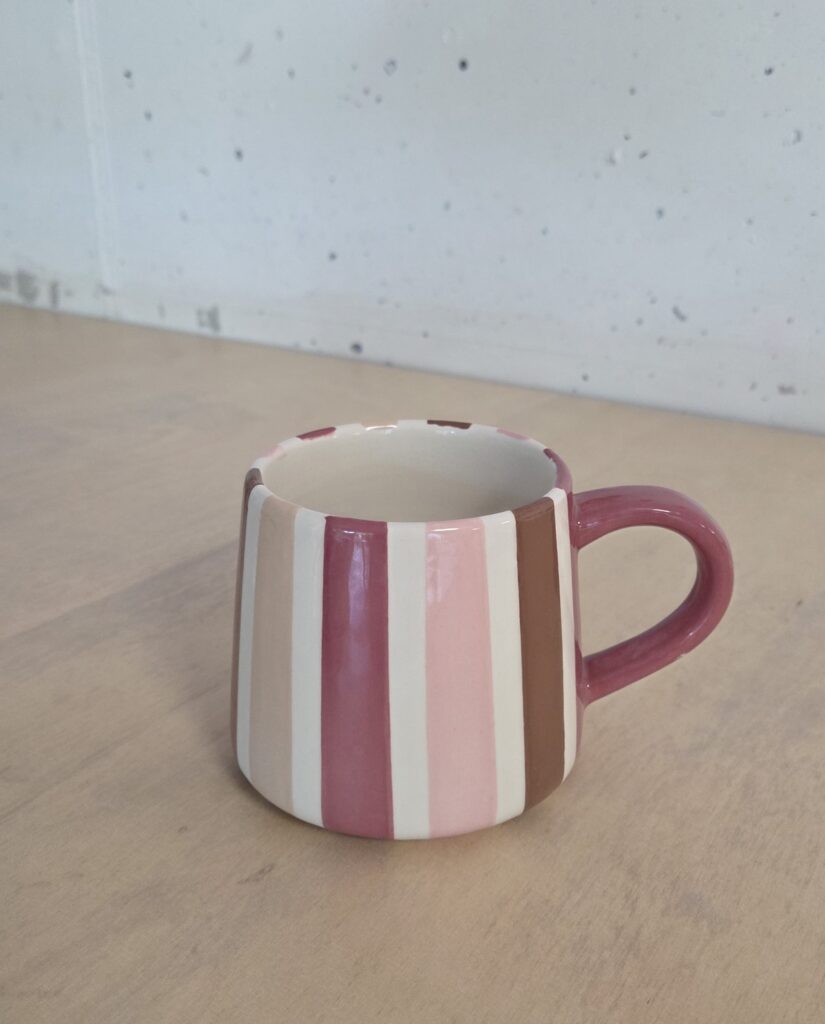
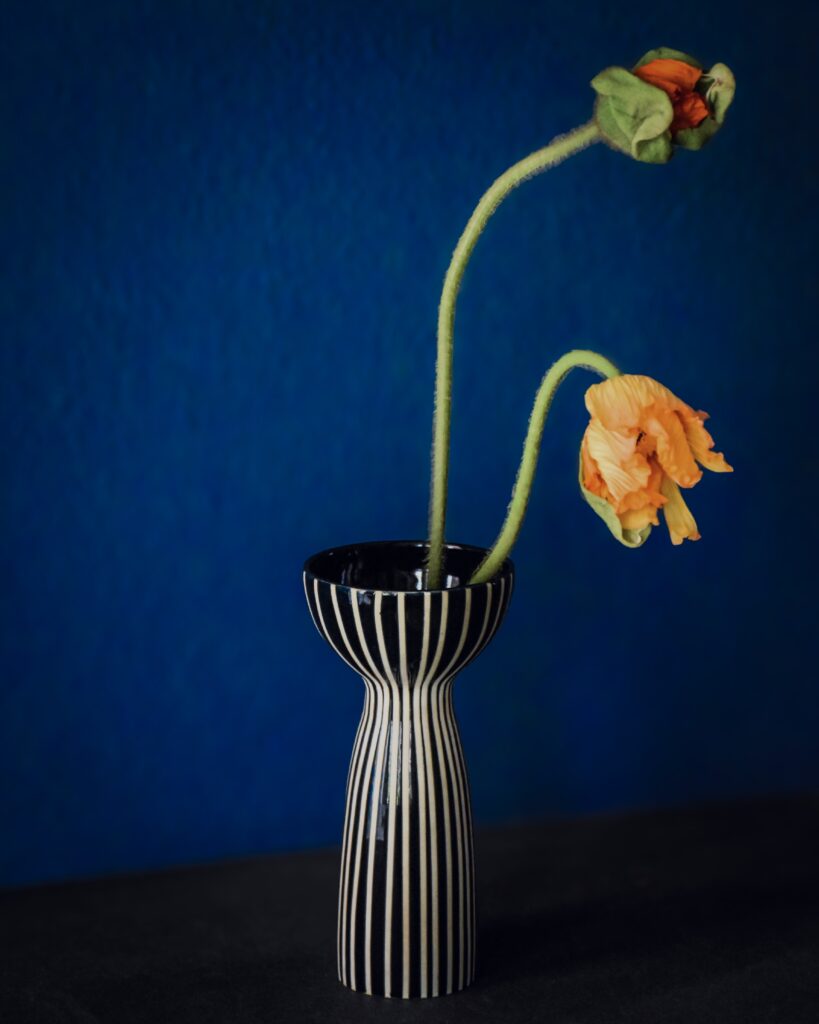
Stripes are timeless and among the most popular simple techniques for painting ceramics. Depending on how you apply them, they can appear clean and modern or playful and handmade.
For clean, even stripes, masking tape is your best tool. Lightly mark your lines with a ruler and pencil, then stick the tape along the markings and finally paint the remaining areas.
If you prefer an organic design, you can forgo the masking tape and draw your lines freehand with a pencil or icing pen. Slightly uneven stripes add charm and personality, especially to cups and mugs.
Good to know: Graphite pencil lines burn out completely in the oven and can therefore be used as guidelines without hesitation.
4. Tape method
Difficulty level: Easy
Materials and tools: Adhesive tape, ruler, icing pen (all optional)
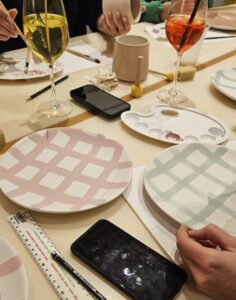
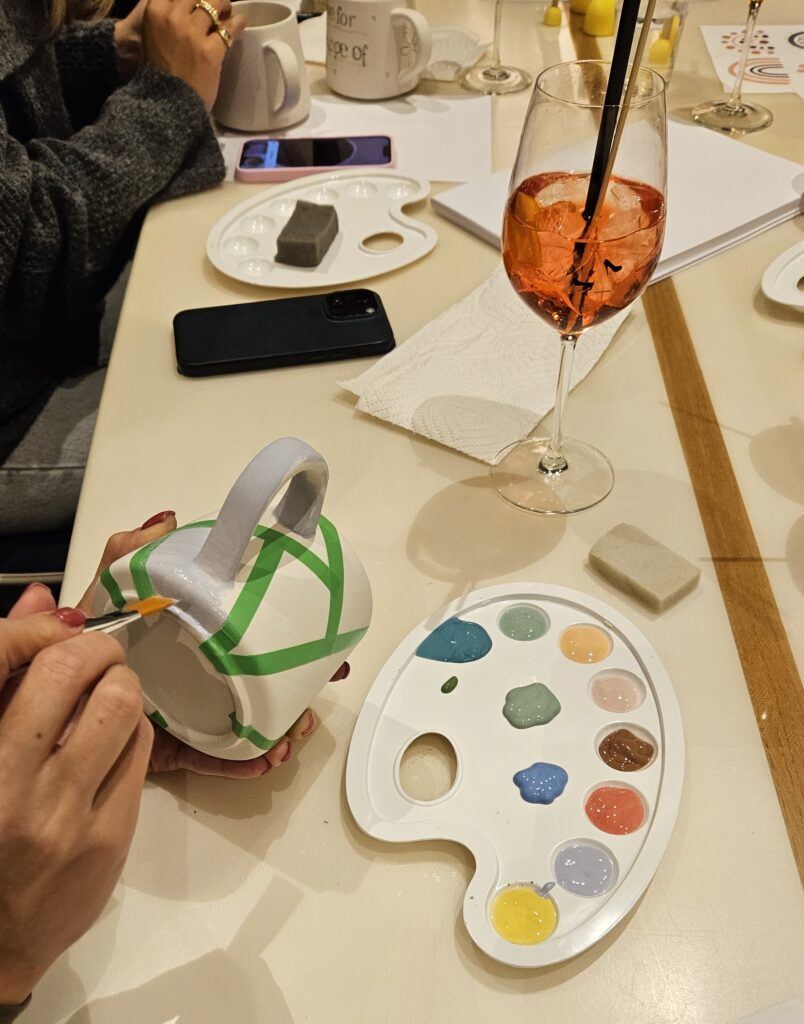
The tape method is a bit like coloring in a coloring book. First, you define your shapes, then you fill them in with icing. With tape, you can create simple geometric patterns, bold areas of color, or even organic lines with narrow, flexible tape.
Helpful tips:
- Always leave a small piece of tape as a "tab" so you can peel it off more easily later.
- Let the glaze dry completely before removing the tape. If some areas are still wet and others are already dry, pieces of dry glaze can flake off and fall into damp areas, ruining your clean lines.
- It's best to peel off the tape over a trash can so that dry particles are caught directly.
Helpful tips:
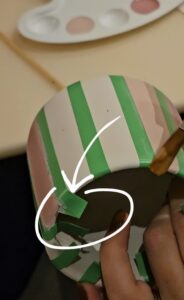
- Always leave a small piece of tape as a "tab" so you can peel it off more easily later.
- Let the glaze dry completely before removing the tape. If some areas are still wet and others are already dry, pieces of dry glaze can flake off and fall into damp areas, ruining your clean lines.
- It's best to peel off the tape over a trash can so that dry particles are caught directly.
5. Monochromatic gradient
Difficulty level: Easy
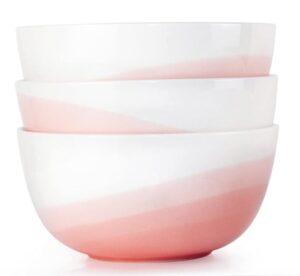
Glazes may look like paint, but they work a little differently than "normal" paints. For example, if you're working with acrylic paint and want to make the color lighter or more transparent, you dilute it with water. With glazes, you don't need to do that. Instead, you work with varying numbers of layers, as it takes several coats for a glaze to become opaque. We use precisely this effect for a monochromatic gradient.
Here's how:
- Choose a color of your choice. A medium or dark shade is best.
- Paint the entire piece with one coat of paint and let it dry.
- Next, repaint the bottom two-thirds with the same color, leaving the top area unpainted. Let it dry.
- Finally, you only need to paint the bottom third one more time.
Your smooth color gradient is now complete.
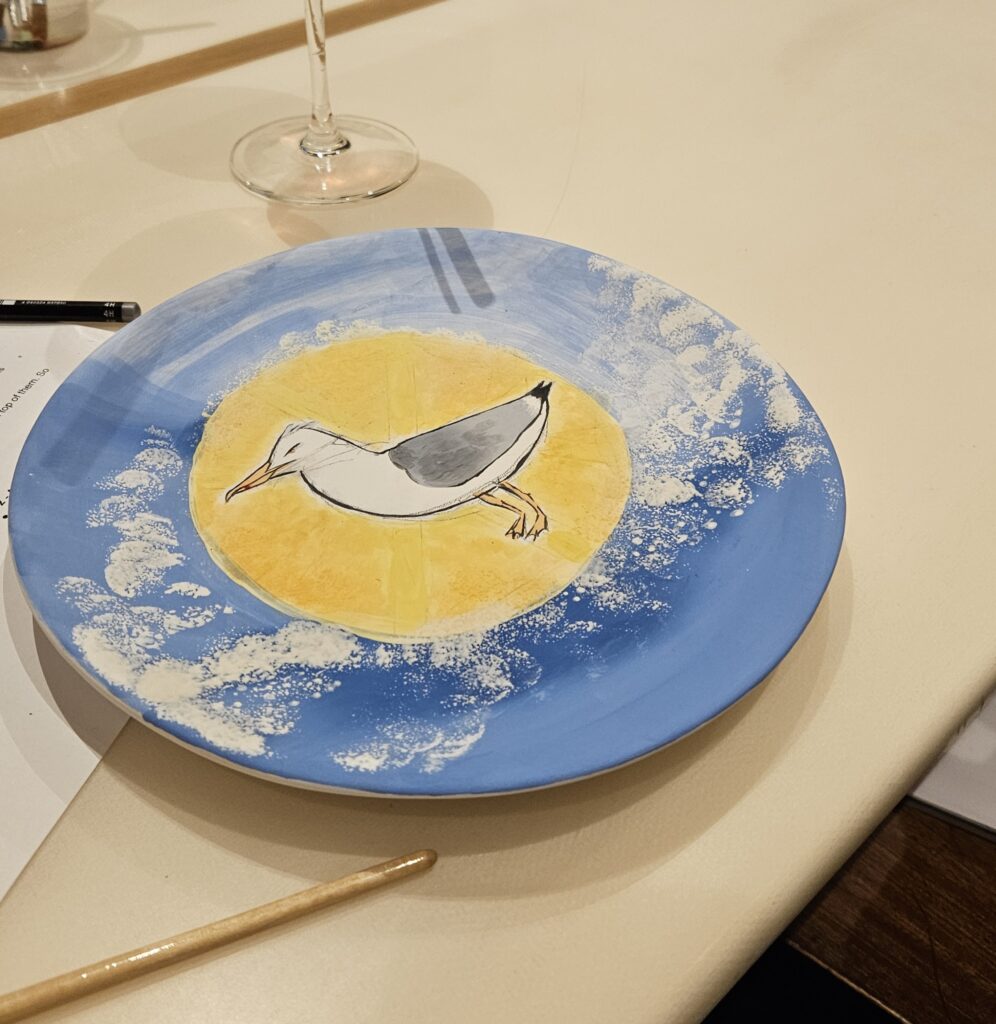
6. Sponge technique
Difficulty level: Easy
Materials and tools: Sponge, optional adhesive tape, ruler, icing pen
The sponge technique is a simple way to add color and texture to your ceramic piece.
Apply the glaze with a sponge. Different sponges create different textures. Make sure the sponge doesn't have any sharp, angular edges, as these can look unnatural when dabbing.
We like to tear small pieces out of our sponges to create a more vibrant, organic surface. We also round off the edges slightly to prevent any harsh, unnatural glaze lines or marks.
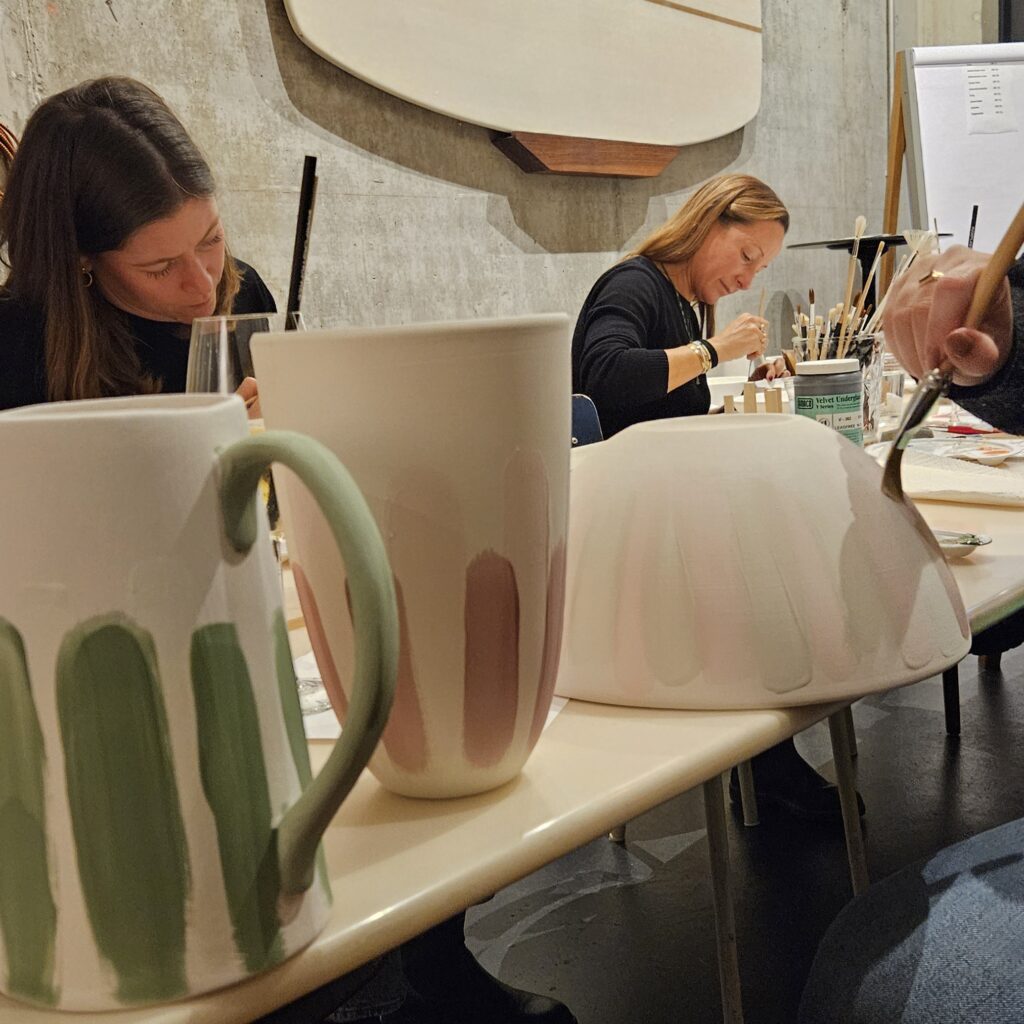
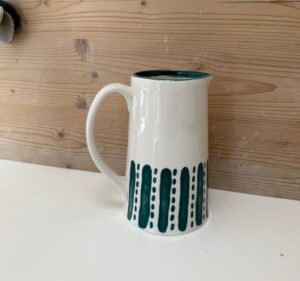
7. Large organic patterns
Difficulty level: Easy to medium
One of the most common mistakes beginners make when painting ceramics is trying to do too much at once. Beautiful designs don't have to be detailed or elaborate to appear deliberate and high-quality.
Therefore, we recommend large, simple organic patterns for beginners. Larger shapes are easier to control, easier to repeat, and more forgiving of minor brushstroke irregularities. Think, for example, of large dots, ovals, soft vertical or horizontal shapes, and other organic forms.
Here's how to proceed:
- Choose a simple shape and repeat it around your object.
- Leave some space between the shapes for a calm, balanced overall look.
- Don't aim for a perfect repetition. Small variations give your piece character.
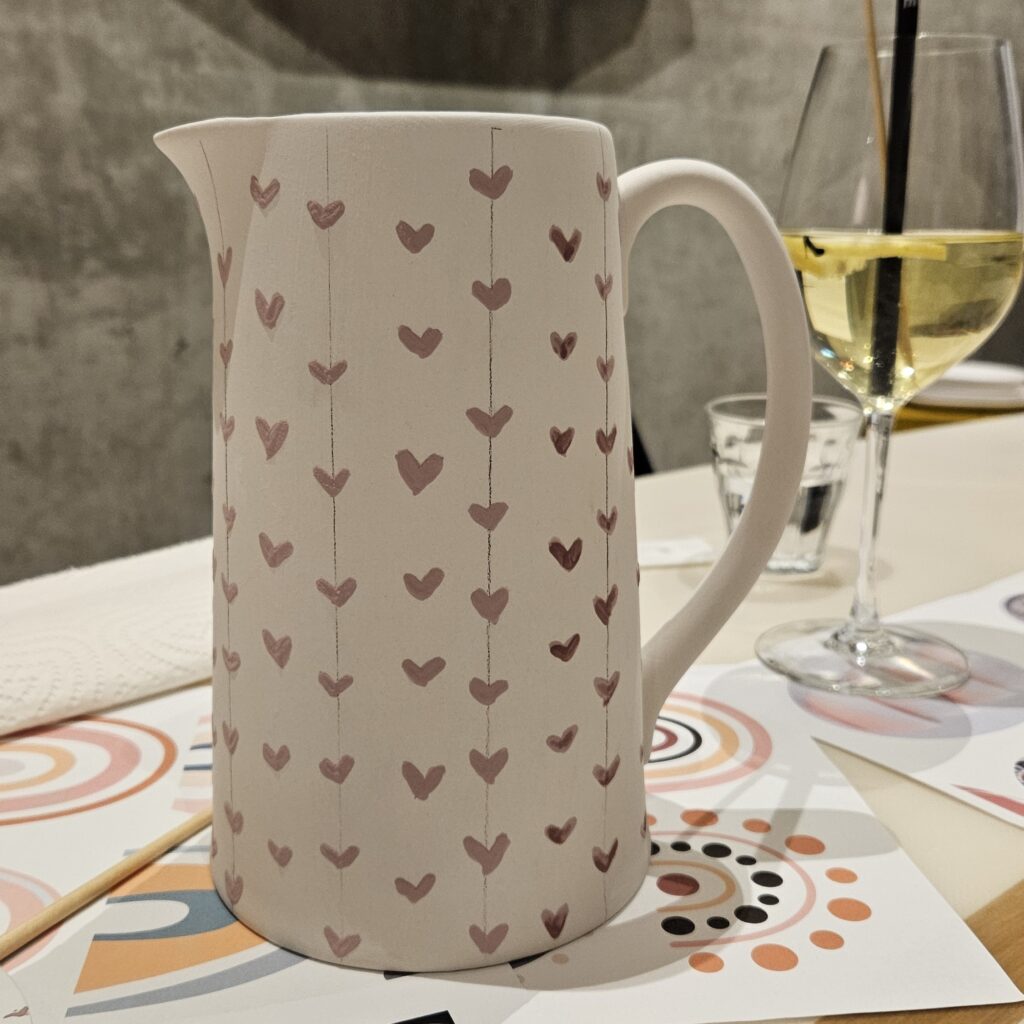
8. Delicate patterns
Difficulty level: Easy to medium
If you want to give your ceramic piece a playful and personal touch, delicate, repeating patterns are a wonderful choice. Small hearts, smiley faces, or simple flowers work particularly well.
If you prefer a light, creamy background, you can leave the surface unpainted and focus solely on the design. This will make the piece look fresh, light, and minimalist.
Important to note:
Each small motif needs about three layers of glaze to be clearly visible after firing. Depending on the size of your object, you should adjust your design accordingly to ensure it remains manageable, especially if you're working in a workshop and time is limited. This will also make it easier to keep track of which areas you've already painted and how many layers you've applied.
9. Typography
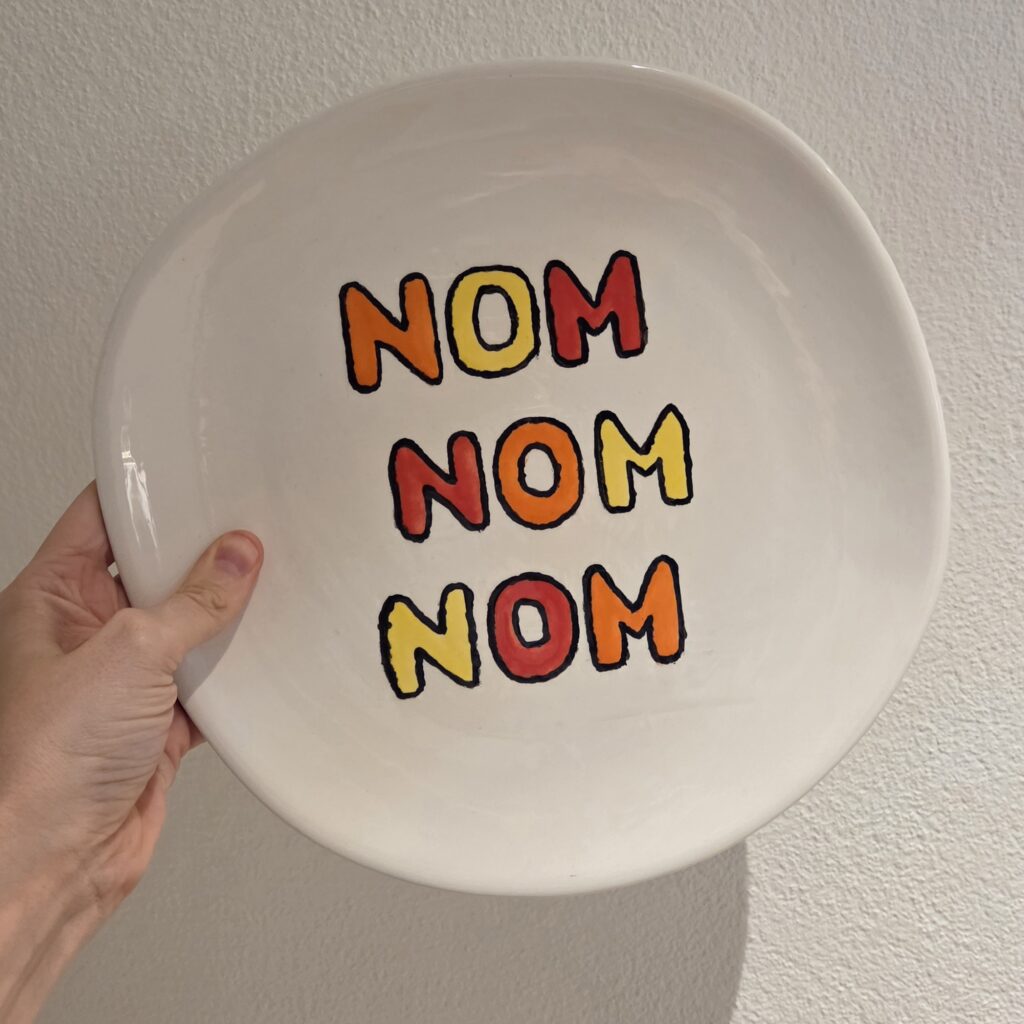
Difficulty level: Easy to medium
Words or short sayings are a lovely way to add personality to your ceramic piece. Simple statements, names, or playful terms work particularly well on mugs and plates.
You can first lightly sketch your text in pencil to plan spacing and placement. The pencil lines will disappear completely during burning, so you don't have to worry about visible guidelines.
A particularly nice idea is to place a saying on the inside bottom of the mug. It only becomes visible once someone has finished their coffee or tea – a sweet little surprise.
Many people choose black for lettering because it is clear and easy to read. However, any color will work in principle, as long as the lines are not too thin.
10. Line designs
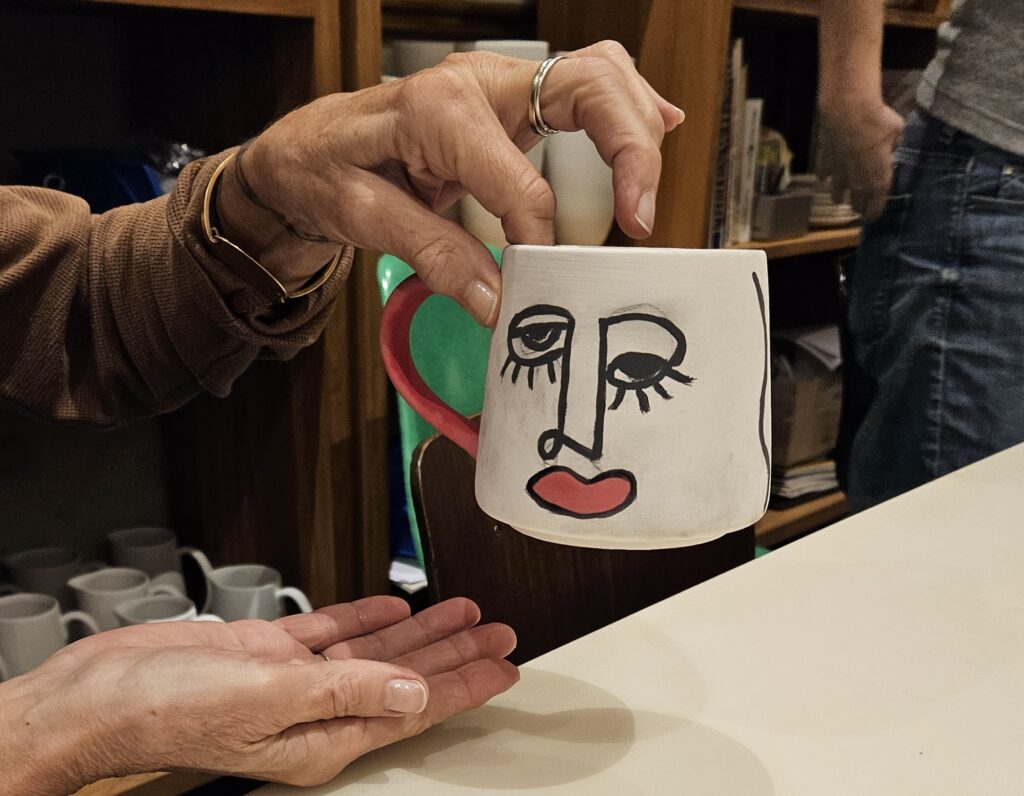
Difficulty level: Easy to challenging (design dependent)
Simple lines are perfect for beginners who like a clean, graphic look. Think minimalist shapes, faces, or abstract lines that gently wrap around your subject.
Lines sometimes feel a bit more open, but they're a wonderful way to trust your intuition. Even simple lines can create expressive and charming results. Many beginners are surprised by how good they look in the end.
Black is a popular choice for line work, but basically any color will work.
We know we said ten. But we couldn't resist. There are just too many great and easy techniques for painting ceramics to stop there. So here's a little bonus design, number eleven.
Bonus 11. Color blending
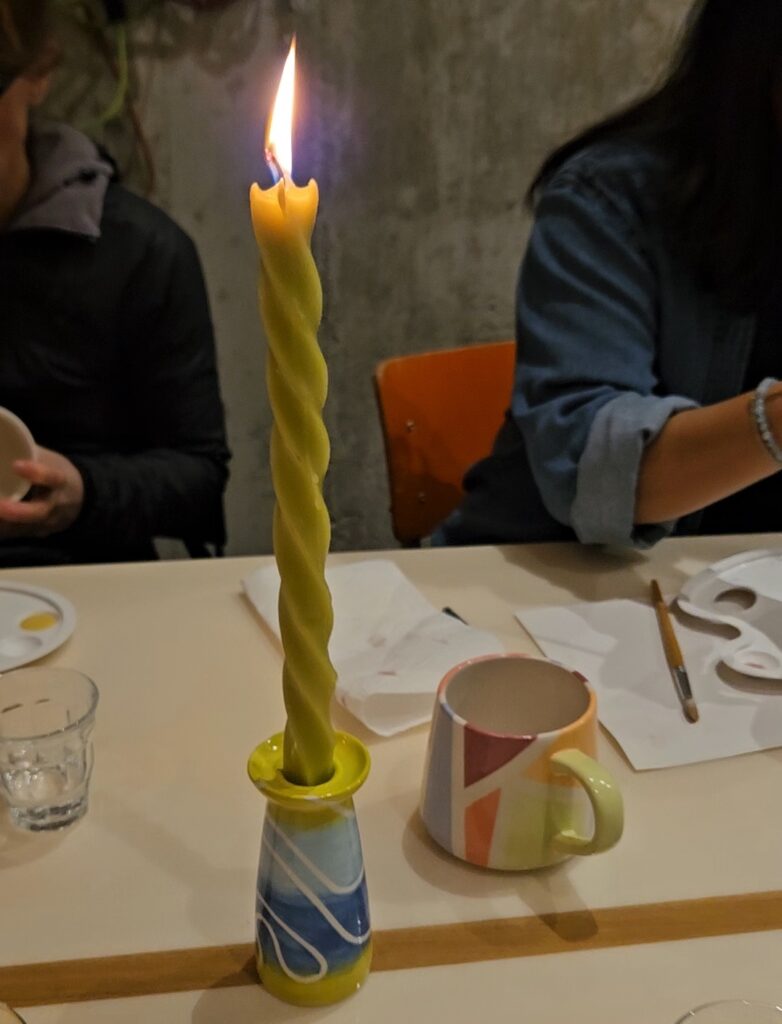
Difficulty level: Easy to medium
The gradient or blending technique is a great way to add depth to your design while keeping it simple. Start by choosing two or three colors. If you're feeling adventurous, you can use more, but a limited color scheme often creates a calmer and cleaner look.
Apply the colors side by side, slightly overlapping them. Use a little less glaze in the overlapping area so that the colors blend softly and don't merge into a solid, opaque surface.
Before applying the colors on top of each other, you can also use masking tape to incorporate another design element, such as a candle holder with clearly defined color areas.
It's your turn
Inspired? Good — that's exactly the point.
If you've looked at these designs and thought, » I could do that too ," then trust that feeling and come to one of our neighbors Pottery & Paint Workshops .
Grab a friend, choose a design, and spend a few hours creating something with your own hands. No experience necessary, no stress—just good company, a good atmosphere, and a painted ceramic piece to take home.
Our workshops are held in collaboration with the 25hours Hotel Zurich Langstrasse — so the location is at least as good as the pottery studio. Creative energy, a great atmosphere, and just the right afternoon program for a real break.